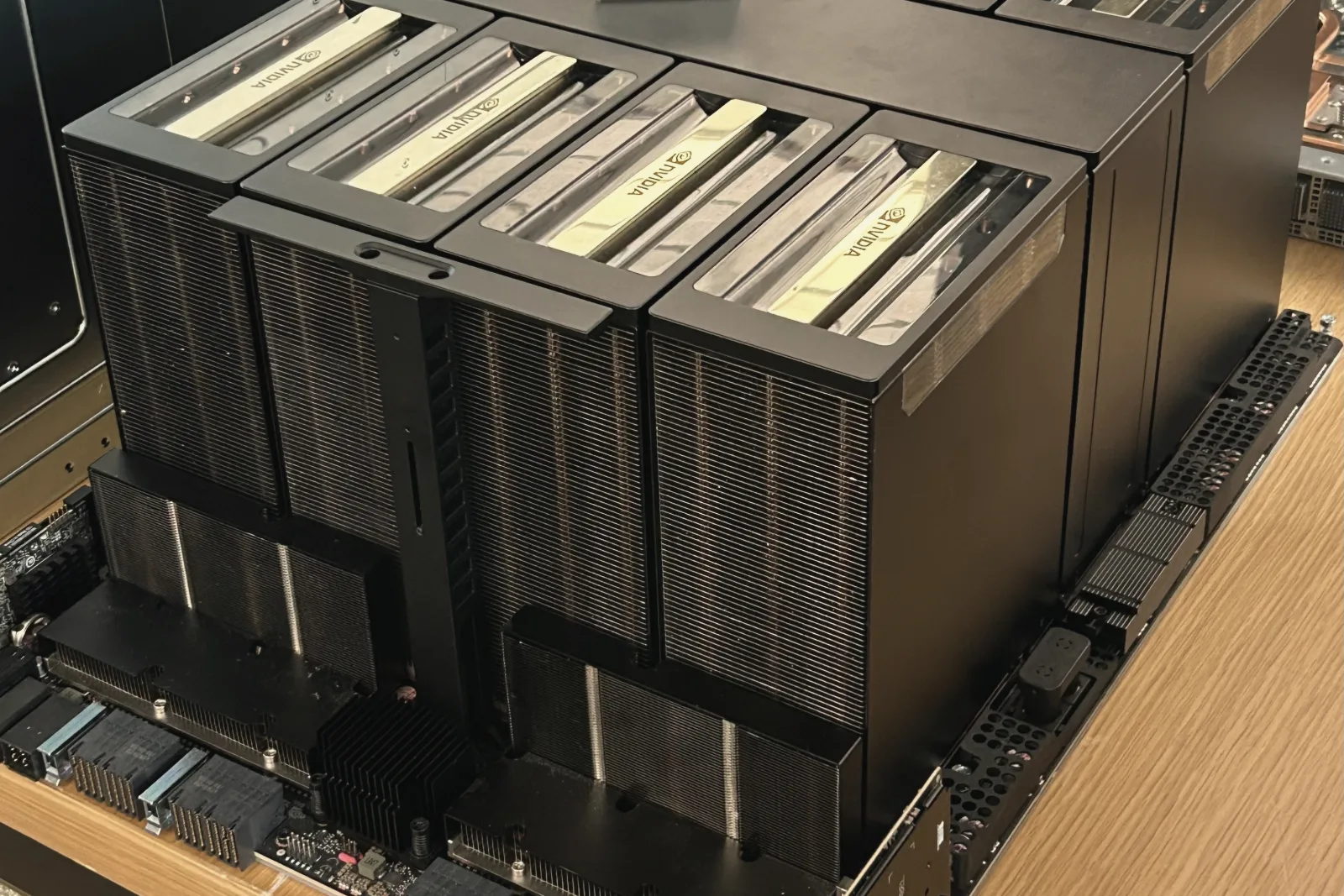
Georgetown University's Center for Security and Emerging Technology (CSET) published a report on 29 September 2026 that assesses location verification as a tool for enforcing US export controls on AI chips. Its authors, Jacob Feldgoise, Kyle Miller and Hanna Dohmen, compared methods on verifiability, accuracy, security and repeatability. They conclude that a centralized ping-based location verification (PLV) system, supplemented by physical inspections to investigate leads, would be the most robust and feasible approach. They make no recommendation on whether policymakers should mandate location verification.[1, 2] A House committee's version of the Chip Security Act lists ping-based location verification as one acceptable mechanism.[3]
In PLV, trusted landmark servers at known locations estimate a chip's location from the round-trip time of signals sent to it. The authors recommend that each chip sign its responses in the firmware of its trusted execution environment (TEE), an isolated area of the processor. They judge that this offers the best balance of security, cost and ease of implementation. One reason they give is that firmware updates can reach TEE-equipped chips already in use. Any implementation, they add, is unlikely to withstand state-backed attackers.[1]
The report estimates that a PLV system would cost $3.1 million to $28.8 million a year if the landmark servers are owned. If they are rented, the estimate is $2.6 million to $72.4 million a year. In more than ten million simulated scenarios, physical inspections never detected more diverted chips per dollar than PLV. This held even though the authors deliberately chose model parameters that favor inspections.[1, 2]
The authors also describe inherent limits. PLV can detect diversion only after it occurs. A chip that stops responding may be in storage or deliberately disconnected. Accuracy is likely no better than about 20 miles, so the system cannot reliably distinguish nearby data centers run by different operators. Because PLV verifies locations rather than users, it cannot detect a transfer to a restricted company in the same data center.[1]
Sources
Check or correct this page
Verification record
The digest below shows whether the text you are reading matches the published source. It does not show that the reporting is correct. The build computes it from this page's Markdown source and lists it in the site manifest.
36aa25118b41b78bd4f6738a74dfb1de3627a6366fd1c23c73a82f7bdb79dd70