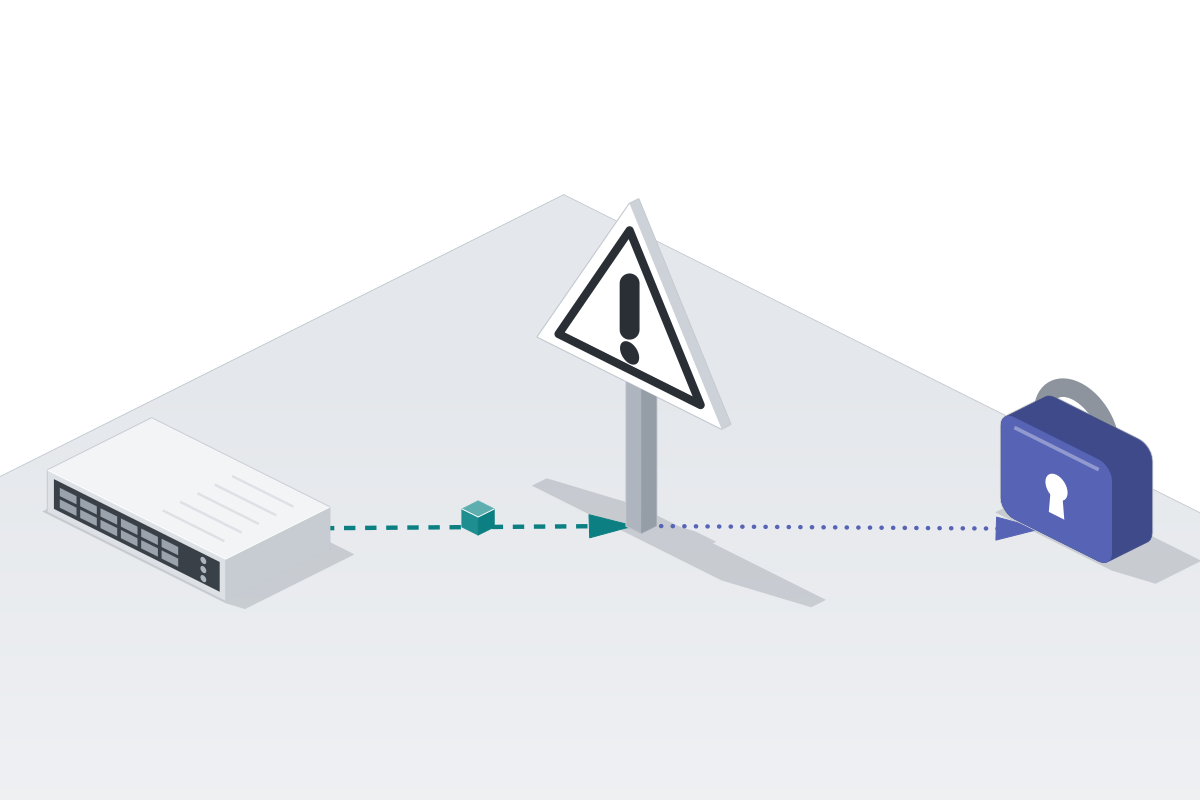
Mustafa S. Aljumaily, Nawar S. Alseelawi and Raghad Alshabandar submitted an arXiv preprint on 8 November 2026 comparing prompt-injection defenses for tool-using agents. Its abstract reports that deterministic controls outside the model can restrict malicious tool calls even when the model proposes them. The study compares prompt defenses, four reference monitors that check actions against policy, human approval and taint tracking in an executable environment with 13 tasks and 12 tools.[1]
For Qwen2.5-1.5B and Qwen2.5-7B, the authors report 156 attack episodes per defense and model. Behind the task-bound monitor, the models proposed the attacker’s call in 64% and 84% of episodes; the monitor admitted 1.3% and 7.7%, respectively. These are reported results for two models under static attacks, not evidence that the controls stop every attack.[1]
The abstract separately describes simulations in which an assumed erosion law drives guardrail stacks to 100% attack success under persistent adaptive attacks or model compromise, while the task-bound monitor holds severe actions at 0%. Human-approval and taint-tracking results are simulation-only. The authors also acknowledge that the larger model’s detector results contradict the assumed erosion law. They say code, data, an oracle audit and a reproduction notebook are provided.[1]
[1]: https://arxiv.org/abs/2611.11571
Sources
Check or correct this page
Verification record
The digest below shows whether the text you are reading matches the published source. It does not show that the reporting is correct. The build computes it from this page's Markdown source and lists it in the site manifest.
5a7ccea3b80b24052b331ca72cb6260f9af3e0f5f097475e6c83b449416b1f3f