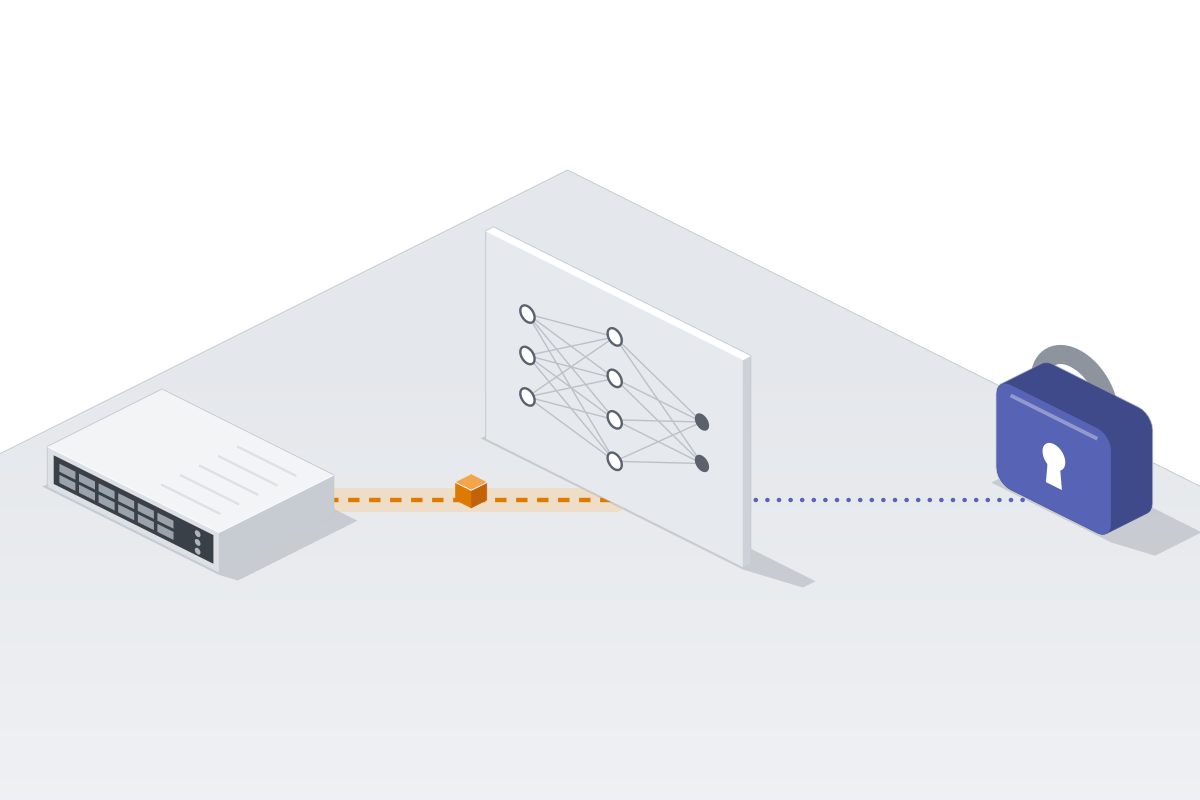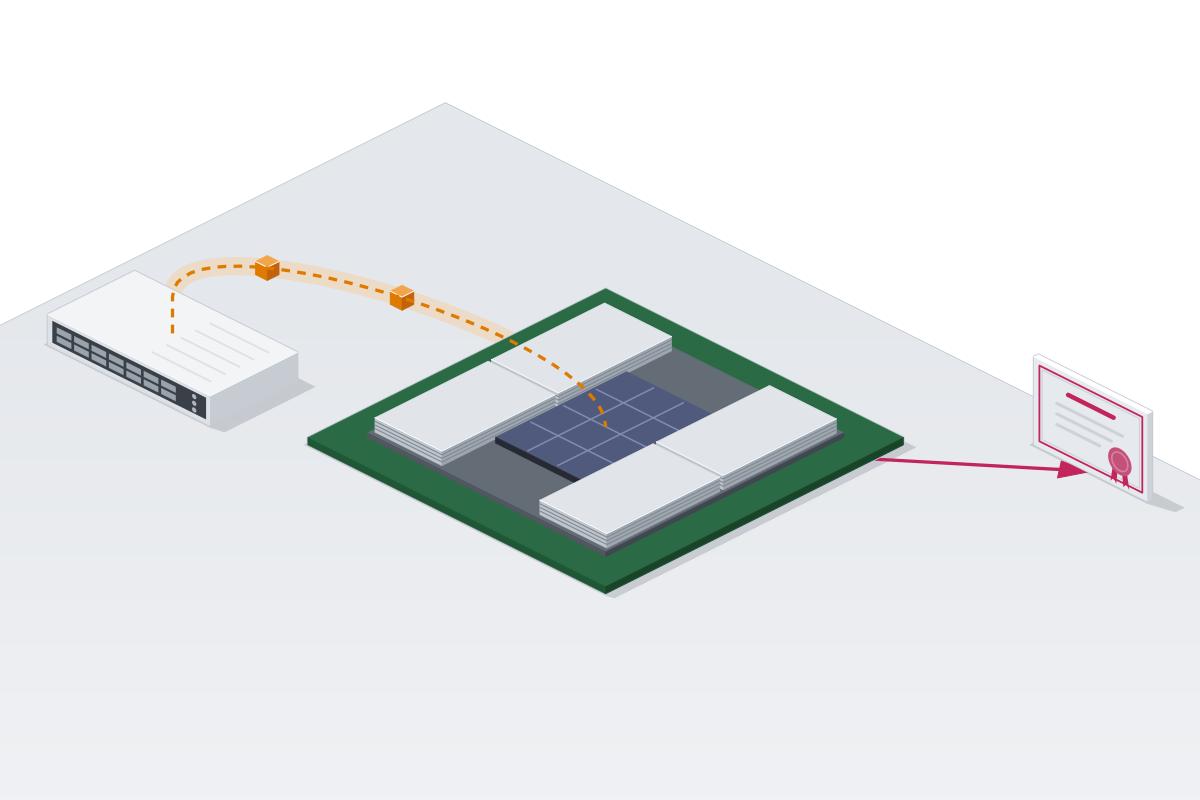
Tomer Solberg submitted Sable to arXiv on 10 November 2026, describing an argument system and single-GPU prover intended to establish that a committed, integer-quantized transformer produced a specified token sequence from a given prompt, bit for bit. The preprint targets open-weight models and explicitly says its proofs are not zero-knowledge.[1]
The abstract defines an integer function, F_O, with no floating-point step: rounding, normalization, softmax and sampling decisions are determined by its inputs. It claims constraints that never wrap modulo the 31-bit KoalaBear prime. The construction batches zerochecks and LogUp-GKR lookups into one sumcheck per domain, commits to witness tensors and weights, and streams model layers through one GPU.[1]
The author reports proving all 64 layers of Qwen2.5-32B on one NVIDIA RTX PRO 6000 Blackwell GPU in 92.5 seconds for 4,096 tokens and 398 seconds for 16,384 tokens. Reported proof generation costs 41–50 times serving time; verification with a compiled core takes 19–56 seconds on one CPU core. The abstract states a round-by-round soundness error of 2^-103 for the interactive proof in the random-oracle model.[1]
Bit-exactness concerns F_O. The abstract reports that its greedy token matches the BF16 model at 86.3% of WikiText-2 positions. Those results distinguish the claimed execution check from equivalence to BF16 behavior.[1]
[1]: Sable: A Small-Field Sumcheck Argument for Bit-Exact Inference of Large Language Models, Tomer Solberg, arXiv, 10 November 2026.
Sources
Check or correct this page
Verification record
The digest below shows whether the text you are reading matches the published source. It does not show that the reporting is correct. The build computes it from this page's Markdown source and lists it in the site manifest.
dd3f2dcfce5bbded6d6bc8c74a194ee4347bdbb44bbb6d3329c33685f0f71983